
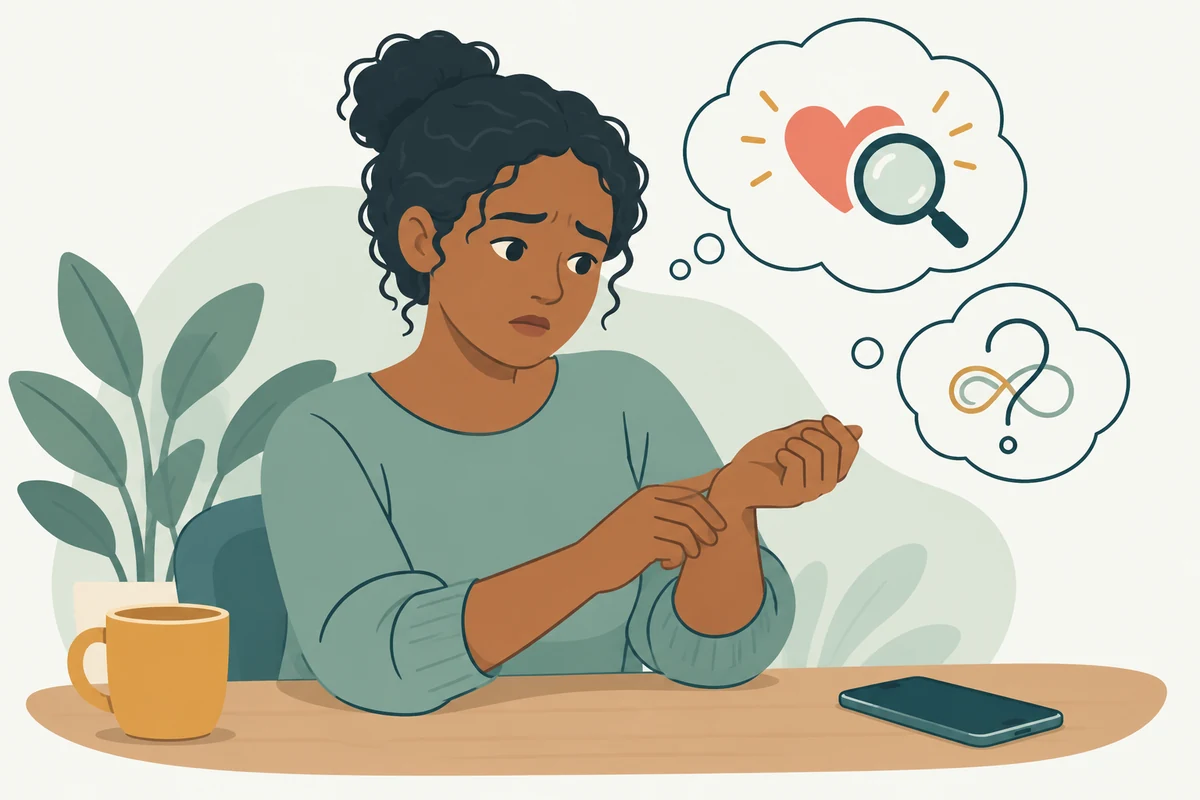
You notice a sensation and search for an explanation. You check your pulse, compare a symptom with something online or ask someone whether you seem okay. For a little while, the answer helps. Then another doubt appears.
If this is taking up more of your day than you want, you may recognise the health-anxiety checking cycle. It is a pattern you can work on without dismissing your symptoms or giving up appropriate medical care.
Health anxiety: checking again?
A sensation, a check, a moment of relief — then another doubt. This video shows how repeated body checking can keep your attention fixed on your health.
Work on repeated anxiety-driven checking alongside appropriate medical care. Continue any monitoring or follow-up advised by your clinician.
Read the key points
Checking your pulse, inspecting your body or searching symptoms can bring short-term reassurance. The doubt may return, prompting another check. Noticing the urge and practising a different response can help you step out of the cycle. This does not mean ignoring new symptoms or medical advice.
Why can body checking make health anxiety harder?
A check is often an understandable attempt to feel safer. The difficulty is that short-term reassurance cannot provide complete certainty about your health. When another sensation or doubt appears, checking can start to feel necessary again.
Checking might mean repeatedly feeling for changes, measuring your pulse without a medical reason, searching the same symptoms, or asking others the same question in slightly different ways. Paying close attention to your body can make small sensations harder to leave in the background.
Some people respond by avoiding appointments, health information or activities they fear could cause symptoms. The behaviours may look different, but anxiety is still shaping daily life.
Imagine reading a reassuring answer online, closing the page and then thinking, “But what if my situation is different?” You add another detail to the search. The search has answered one question, but it has also made room for the next one. This example illustrates a pattern; it does not tell you what a particular symptom means.
Reducing checking does not mean ignoring your health
Health anxiety can occur alongside a diagnosed physical condition or symptoms that have not yet been explained. The question is how you are coping with uncertainty, rather than whether every sensation is “just anxiety”.
Continue medication, screening, monitoring and follow-up advised by a healthcare professional. Seek appropriate medical advice about new, worsening or concerning symptoms. A therapist cannot rule out a physical cause through an article or video.
If it is hard to tell useful monitoring from repeated anxiety-driven checking, discuss a clear plan with your clinician: what to monitor, how often and when to ask for help. That shared plan can guide the work you do in therapy.

A small way to begin changing the pattern
Start with one familiar, repeated check that is outside any medically advised monitoring. The aim is to notice the habit and choose a different response, rather than stop every check at once.
- Name the urge. “I want to search that symptom again because I feel uncertain.”
- Notice the cost. Is this giving you useful new information, or another short spell of relief followed by more searching?
- Agree one manageable change. You might pause before repeating a search and return to an everyday activity. If this feels difficult to judge, plan it with a therapist.
- Look at what you learned. Were you able to stay with the activity for a while, even with some uncertainty? That can matter more than whether the anxiety disappeared.
For example, after a repeated search you have already discussed as part of the anxiety cycle, you might choose to finish making lunch before deciding whether to look again. This is not a rule for delaying medical help. It is an example of giving an established habit less control over your afternoon.
Try not to replace the original check with repeatedly asking yourself whether you feel calm yet. You are practising a different response, and some discomfort may still be present.
How can CBT help with health anxiety?
In CBT, we explore what triggers the fear, what you make of bodily sensations and what happens when you check, seek reassurance or avoid something. Together, we can plan gradual changes and test predictions while keeping appropriate healthcare in place.
The goals can be personal and practical: being more present with family, spending less time on symptom searches, or returning to an activity you miss. We review how the work is going and adjust the plan together.
If health worry is disrupting daily life or self-help is not enough, speak with your GP or a qualified therapist. You can also read about my approach to CBT for health anxiety.
I offer online CBT for people aged 16 and over across the UK. A free 5–10 minute first call gives us a chance to discuss what you need and whether we could work well together. Request a callback or see session fees.