
Online CBT for specific phobias
A particular object or situation can bring on intense fear, even when part of you knows the danger may be smaller than it feels.
Ask about a free first call Watch my short video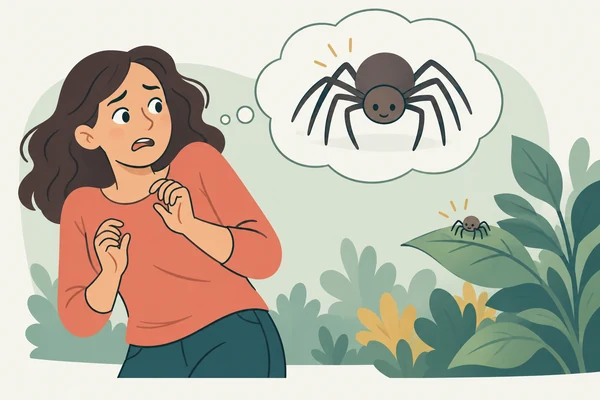
What you might notice
A specific phobia is a strong fear linked to an identifiable trigger, such as animals, needles or flying. You may recognise that the fear is out of proportion yet still feel an urge to escape. Avoidance can bring immediate relief while leaving the fear untested.
How CBT for phobias can help
We identify your predictions and the ways avoidance keeps the fear going. Treatment often includes graded exposure: a series of planned, manageable encounters with the trigger, agreed together. We review what you learn at each step and adapt the pace; you will not be pushed into an exercise without discussion.

What could progress look like for you?
I have particular experience working with needle phobias and arachnophobia (fear of spiders), and have helped several clients overcome these phobias by the end of treatment. I also work with other specific fears. We’ll focus on what you want to be able to do, agree manageable steps and review progress together. Individual experiences and outcomes vary.
If needles, injections, vaccinations or blood tests are your main concern, you can read my dedicated page on online CBT for needle phobia, including considerations for people who feel faint during procedures. If you are frightened of spiders, my online CBT for spider phobia (arachnophobia) page explains how we can plan gradual exposure without surprises.
Needles, blood or spiders: where should I start?
These fears can overlap, but the detail matters. Needle phobia may centre on injections or procedures; blood phobia may involve the sight or thought of blood even without a needle. Spider phobia (arachnophobia) can affect how comfortable you feel in your own home. Tell me what you avoid and what you want to be able to do.
What can we work on in online sessions?
We can understand the fear, agree realistic goals, plan graded steps and review practice. The practical work depends on your surroundings and safety. We do not use surprise exposure, and medical procedures remain with the appropriate healthcare team.
General information, not a diagnosis. Your experience and goals guide our assessment and the plan we agree together.
Further reading and sourcesFacing a phobia: build your own fear ladder
Approaching a fear can involve a series of manageable steps. I use a fear of spiders to show how those steps might look.
Your goal and starting point are individual. Handling a spider is only an example of a possible later step, and is not necessary for everyone.
Read the key points
The video illustrates a personal fear ladder, from a cartoon spider to seeing one from further away, then working towards an agreed goal. The steps are chosen together and built up gradually; there is no single ladder everyone must follow.
How the cycle can keep going
This example shows one way the pattern can be maintained. Your own triggers and responses may look different.

Read the cycle step by step
- Trigger: Seeing a feared animal, such as a dog
- Meaning: It will hurt me. I won’t be able to cope.
- Feelings and body: Fear, tension and a strong urge to get away.
- Response: Leave or avoid places where the animal might be.
- What keeps it going: Relief now; fewer chances to learn what is manageable.
The short-term response can make the pattern more likely to repeat. This is an illustration, not a diagnosis or an individual formulation.
Why avoidance can keep fear going
Avoiding something can bring relief straight away. Over time, it can also leave you feeling that avoidance is the only way to cope. This video explains the pattern in everyday language.
In therapy, we agree small, manageable steps and learn from what happens. You have a say in the pace.
Watch on TikTok (opens in a new tab)Questions about starting therapy
Practical information to help you decide what to do next.
Do I have to face the thing I fear straight away?
No. We first understand the fear and agree a plan. Graded exposure uses manageable steps chosen with you; we explain the reason for an exercise before you decide to try it.
What if I feel faint around blood or needles?
Tell me during assessment and tell any healthcare team involved in a procedure. A history of fainting needs specific consideration, and we may discuss applied tension with appropriate professional guidance. Read about CBT for blood phobia.
Do you offer online phobia therapy anywhere in the UK?
I offer online appointments for people aged 16+ across the UK, subject to assessment. There is no clinic visit. Whether particular practical exercises can be supported remotely depends on your individual plan.
How much does CBT for a phobia cost?
A standard online appointment is £70 for 50–60 minutes. The number of appointments depends on the fear, your goals and progress. See fees or ask about a free first call.
What would you like to be able to do with more freedom?
A free 5–10 minute consultation is a chance to talk about what you need and whether we could work well together.
Request a callback