
Online CBT for health anxiety
A symptom, a news story or a worrying thought can lead to checking and reassurance that only helps for a short time.
Ask about a free first call Watch my short video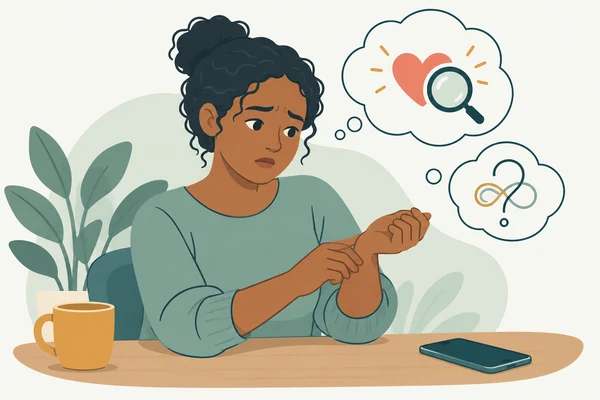
What you might notice
Health anxiety involves persistent fear about having or developing a serious illness. Body checking, searching symptoms or asking for reassurance may briefly settle the worry, only for it to return. Some people instead avoid medical information or appointments because of the fear.
How CBT can help
We explore how you interpret sensations and health information, and how checking, reassurance and avoidance affect the worry. CBT can help you test alternative explanations and build a more balanced response to uncertainty. This work sits alongside appropriate medical care; it does not ask you to ignore new symptoms or medical advice.

What could progress look like for you?
Spend less time caught in checking and reassurance, while continuing to follow appropriate medical advice. We’ll choose goals that are meaningful to you and review how the work is going.
General information, not a diagnosis. Your experience and goals guide our assessment and the plan we agree together.
Further reading and sourcesHealth anxiety: checking again?
A sensation, a check, a moment of relief — then another doubt. This video shows how repeated body checking can keep your attention fixed on your health.
Work on repeated anxiety-driven checking alongside appropriate medical care. Continue any monitoring or follow-up advised by your clinician.
Read the key points
Checking your pulse, inspecting your body or searching symptoms can bring short-term reassurance. The doubt may return, prompting another check. Noticing the urge and practising a different response can help you step out of the cycle. This does not mean ignoring new symptoms or medical advice.
When reassurance only helps for a moment
You feel reassured, then the doubt returns and you want to check again. My short video explores this familiar pattern and the idea of starting with a small change.
Work on repeated checking alongside appropriate medical care. This is not a reason to ignore new symptoms or advice from a healthcare professional.
Watch on YouTube (opens in a new tab)How the cycle can keep going
This example shows one way the pattern can be maintained. Your own triggers and responses may look different.

Read the cycle step by step
- Trigger: Noticing an unfamiliar ache
- Meaning: This could be a serious illness that was missed.
- Feelings and attention: Anxiety and attention narrow onto the body.
- Response: Repeated symptom searches, checking or reassurance.
- What keeps it going: Relief fades; small changes feel more threatening.
The short-term response can make the pattern more likely to repeat. This is an illustration, not a diagnosis or an individual formulation.
How much time is health-related worry taking away from the rest of your life?
A free 5–10 minute consultation is a chance to talk about what you need and whether we could work well together.
Request a callback