

Being told to “just take a deep breath” can be frustrating when you already feel wound up. If you would like a simple breathing pattern to try, the physiological sigh uses two breaths in followed by one longer breath out.
It may help you settle a little during a stressful moment. There is no need to make yourself feel completely calm before getting on with what matters to you.
Try the physiological sigh with me
Follow the demonstration, then try a couple of gentle rounds if it feels comfortable.
Let your breathing return to its usual rhythm afterwards. Stop if you feel dizzy, uncomfortable or more breathless.
Read the key points
Breathe in through your nose, add a small second breath in, then let out one longer, gentle breath. The video demonstrates two rounds. There is no need to force the breath or match the timing exactly.
How to try a physiological sigh
Start somewhere you can sit comfortably. Keep your shoulders loose and use an easy amount of air.
- Breathe in through your nose. Take a comfortable breath without forcing your lungs full.
- Add a small second breath in. Before breathing out, take a little extra sip of air through your nose.
- Let the breath out slowly. Breathe out gently through your mouth, letting the out-breath last longer than the in-breaths.
Try one or two rounds, then return to your usual breathing. There is no breath-hold to complete and no exact number to reach. If the second breath feels awkward, leave it and breathe normally.
Taking bigger and bigger breaths can leave you light-headed. Stop if you feel dizzy, tingly, uncomfortable or more breathless. If you have a condition affecting your breathing, check with your healthcare professional before trying a new breathing exercise. New or severe breathing difficulty needs medical assessment.
When might you use it?
Perhaps you have just finished a difficult call, opened an email that has left you tense, or reached the end of a busy day. A brief breathing pause can give you a moment before you decide what to do next.
For example, after a stressful email you might put your phone down, try a comfortable sigh, then read the message again before replying. The useful part is having a little space to respond in a way you are happier with.
Practising when things are relatively settled can help you become familiar with the pattern. You can also choose another approach. If paying attention to breathing makes you more anxious, 5-4-3-2-1 grounding gives you something outside your body to focus on.
What does the research say?
A 2023 randomised study compared five minutes of daily breathing practice with mindfulness meditation over 28 days. Repeated physiological sighs, called cyclic sighing in the study, produced greater improvements in positive mood and a greater reduction in breathing rate than the meditation condition.
That is encouraging, but the study tested a daily practice in adults. It does not establish that one sigh will stop a panic attack, or that this exercise treats an anxiety disorder on its own.
What do you need after the pause?
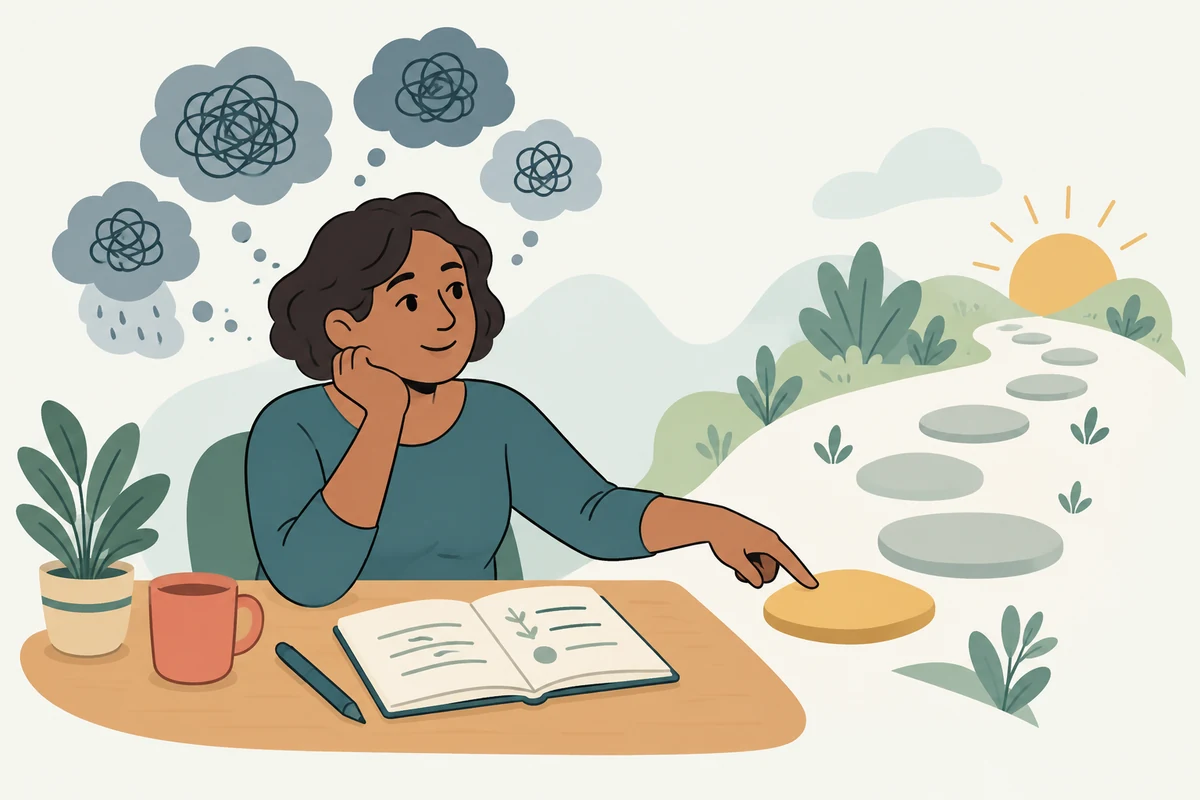
Afterwards, ask yourself: “What would help me next?” It might be returning to the task, asking for support, taking a proper break or having a conversation you have been putting off.
If you begin to feel you must do a breathing exercise before you can enter a situation, that is worth talking through in therapy. We can look at how to use coping tools flexibly while building confidence in your own ability to cope.
If anxiety or panic keeps getting in the way, CBT can help you understand the wider pattern. At Calm Breathing Therapies, I offer online CBT for people aged 16 and over across the UK. You can request a free first call to talk about what has been difficult.