

When anxiety feels loud, your attention can become fixed on frightening thoughts, memories or physical sensations. Grounding is a way of gently redirecting attention towards the place you are in now. The 5-4-3-2-1 exercise gives that attention a simple structure.
A grounding reset to keep close
Swipe through my grounding post, or use the buttons to move between slides.
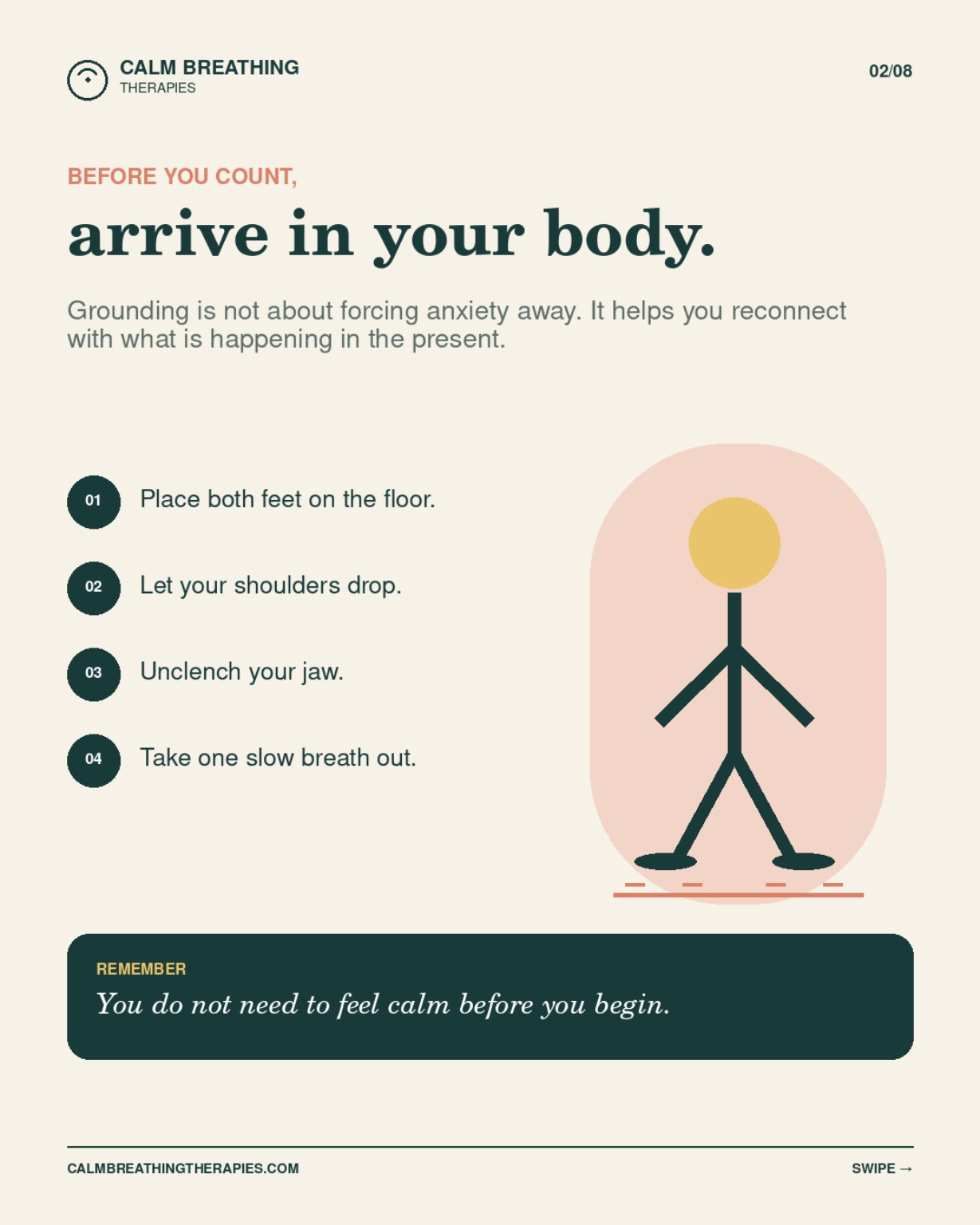
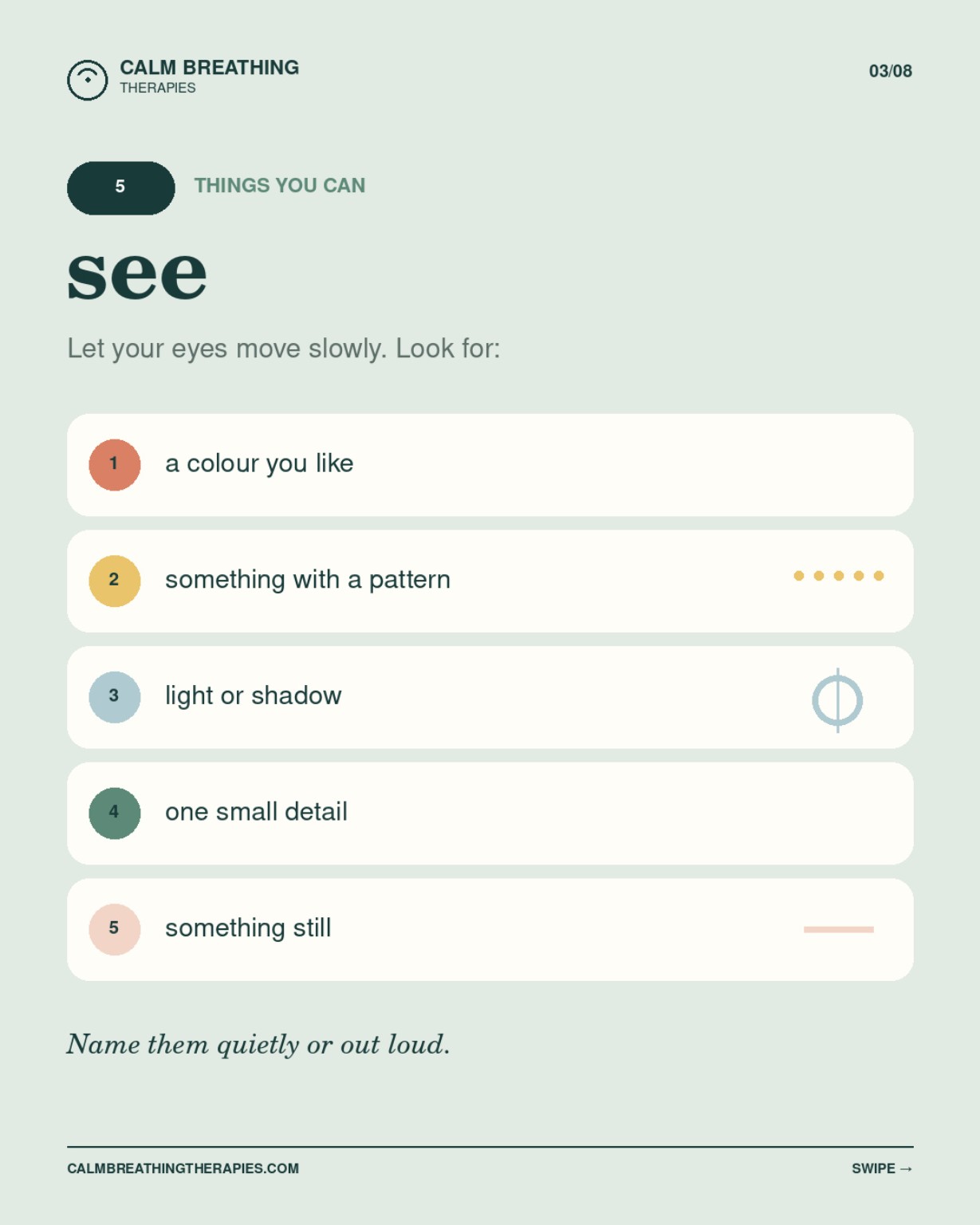
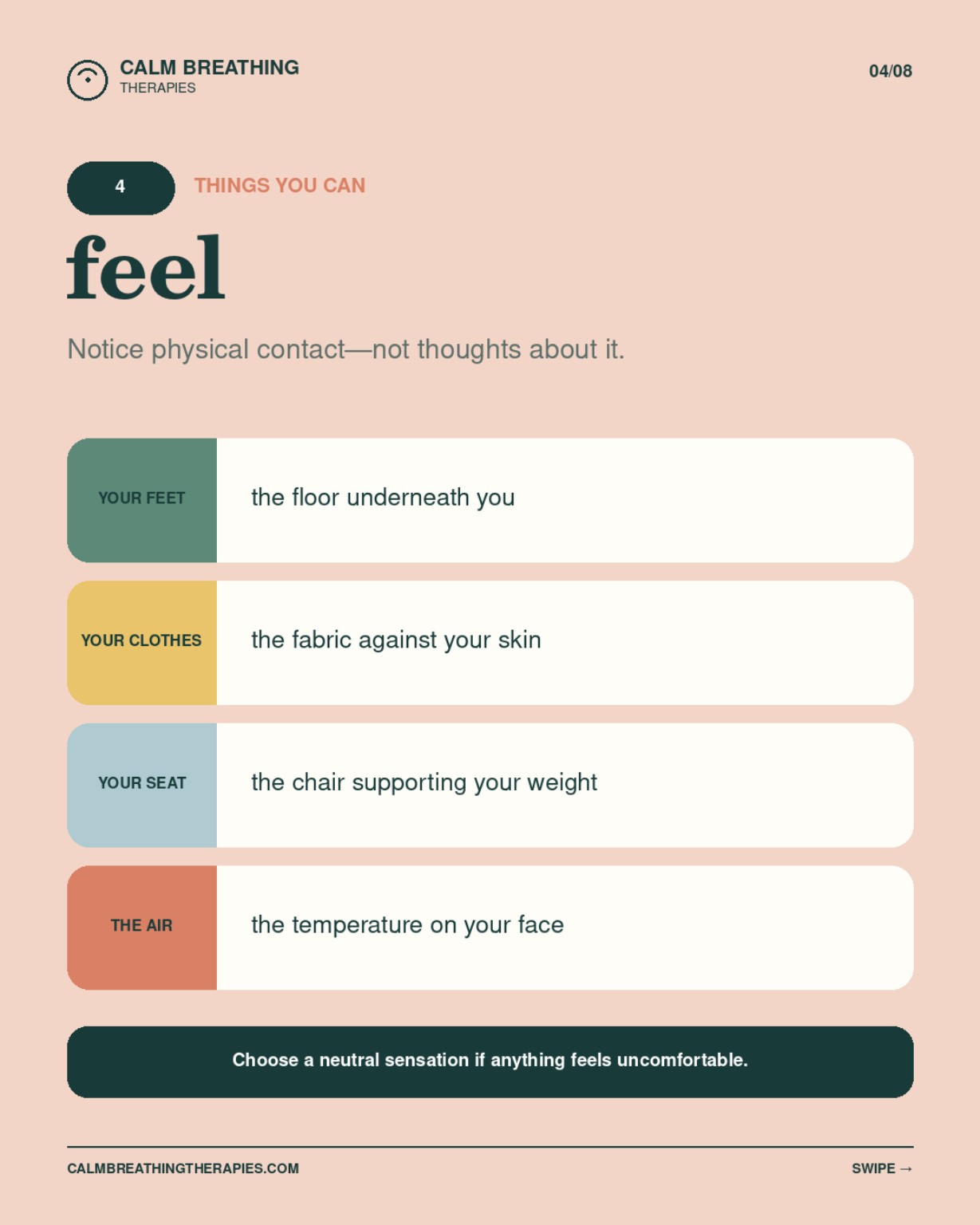
More posts on my InstagramWhen anxiety takes your mind into the future, your senses can help bring your attention back to what is happening now.
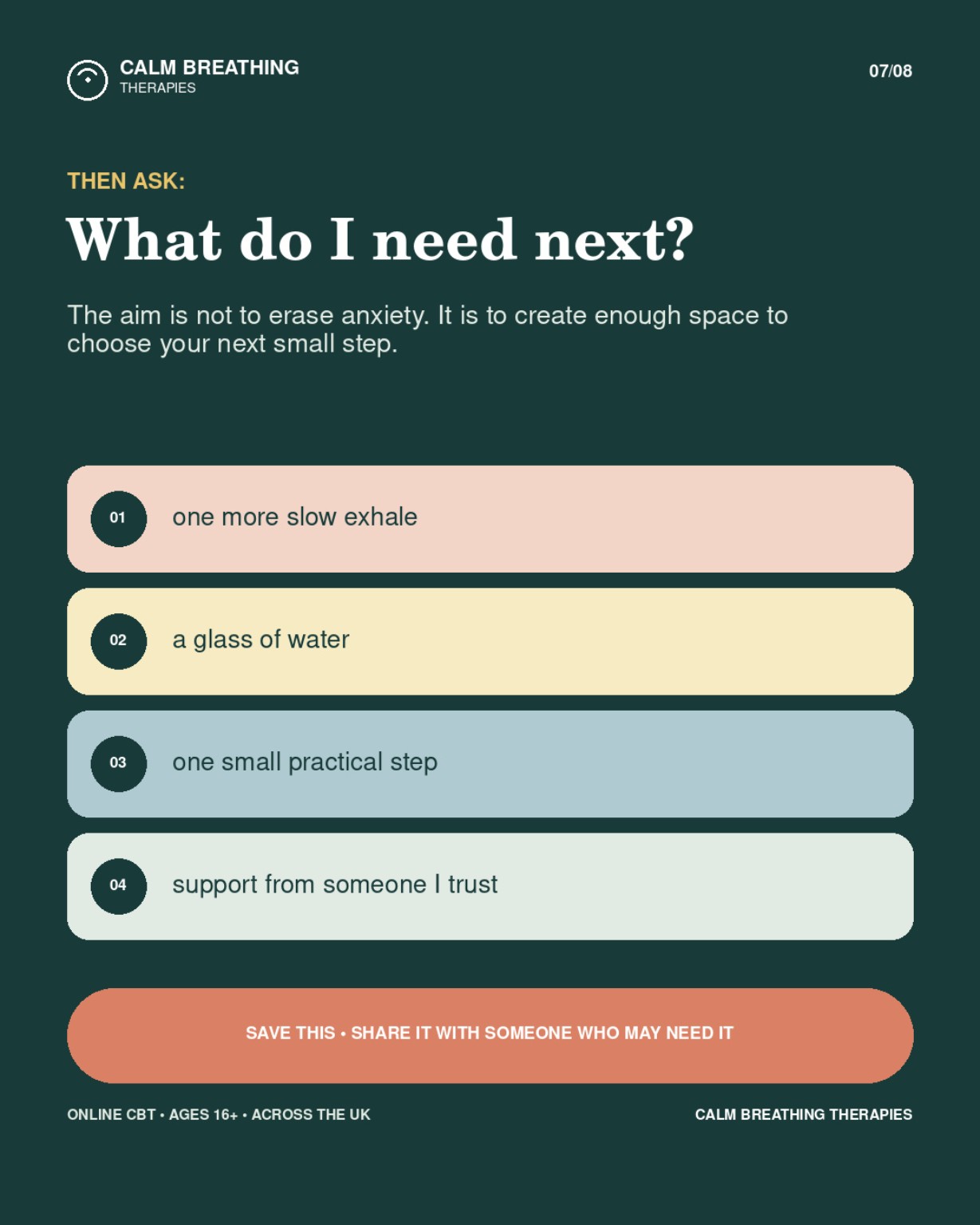
Try the 5–4–3–2–1 exercise slowly. You do not need to do it perfectly, and the aim is not to make anxiety disappear. It is simply to create a little space before deciding what you need next.
If a sensation feels uncomfortable, skip it and choose something neutral instead.
— Shav, Calm Breathing Therapies
How to try 5-4-3-2-1 grounding
Pause wherever you are and look around without rushing. Then name:
- 5 things you can see. Notice small details: colour, shape, light or movement.
- 4 things you can feel. This might be your feet on the floor, fabric against your skin or an object in your hand.
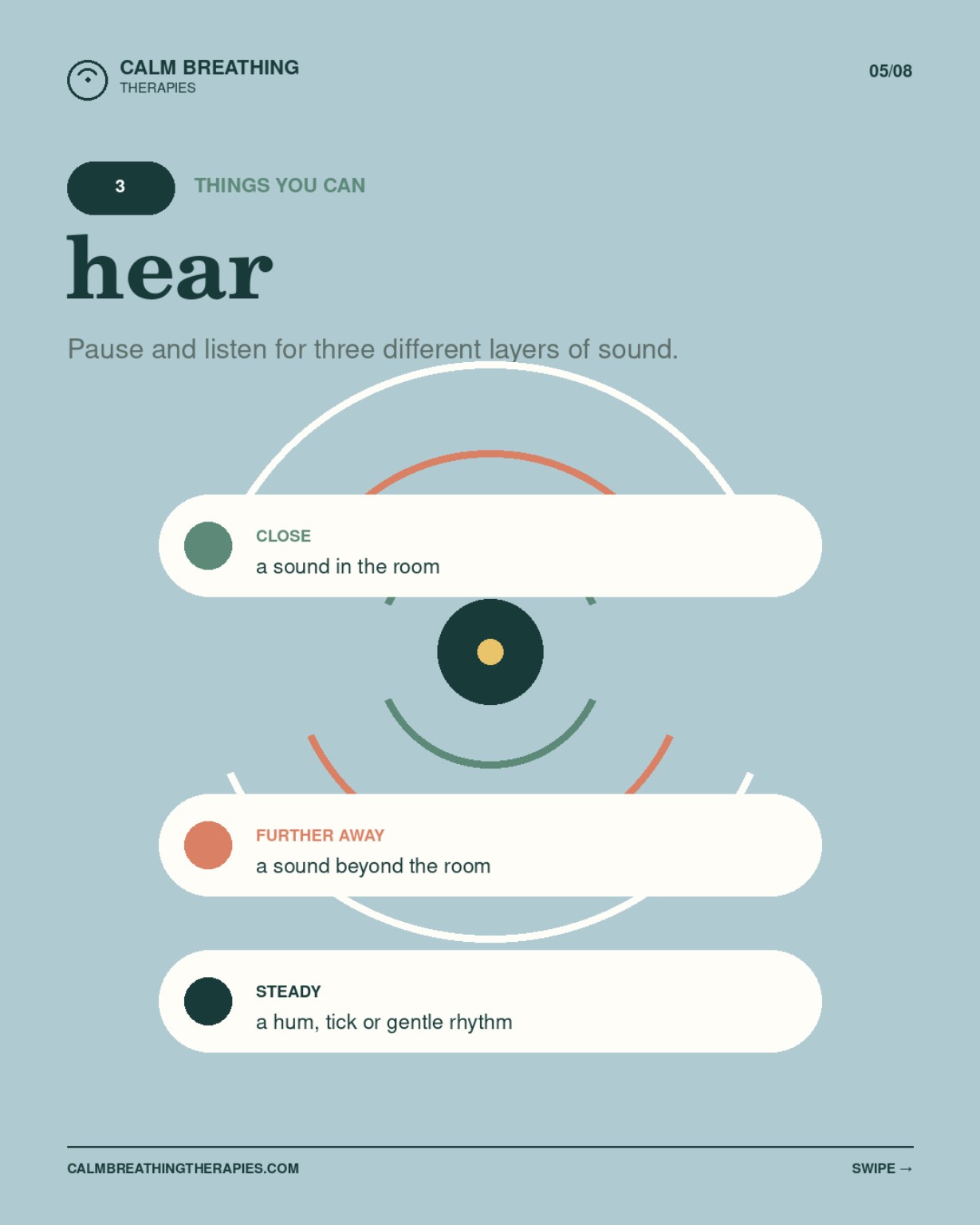
- 3 things you can hear. Include quiet or distant sounds as well as obvious ones.
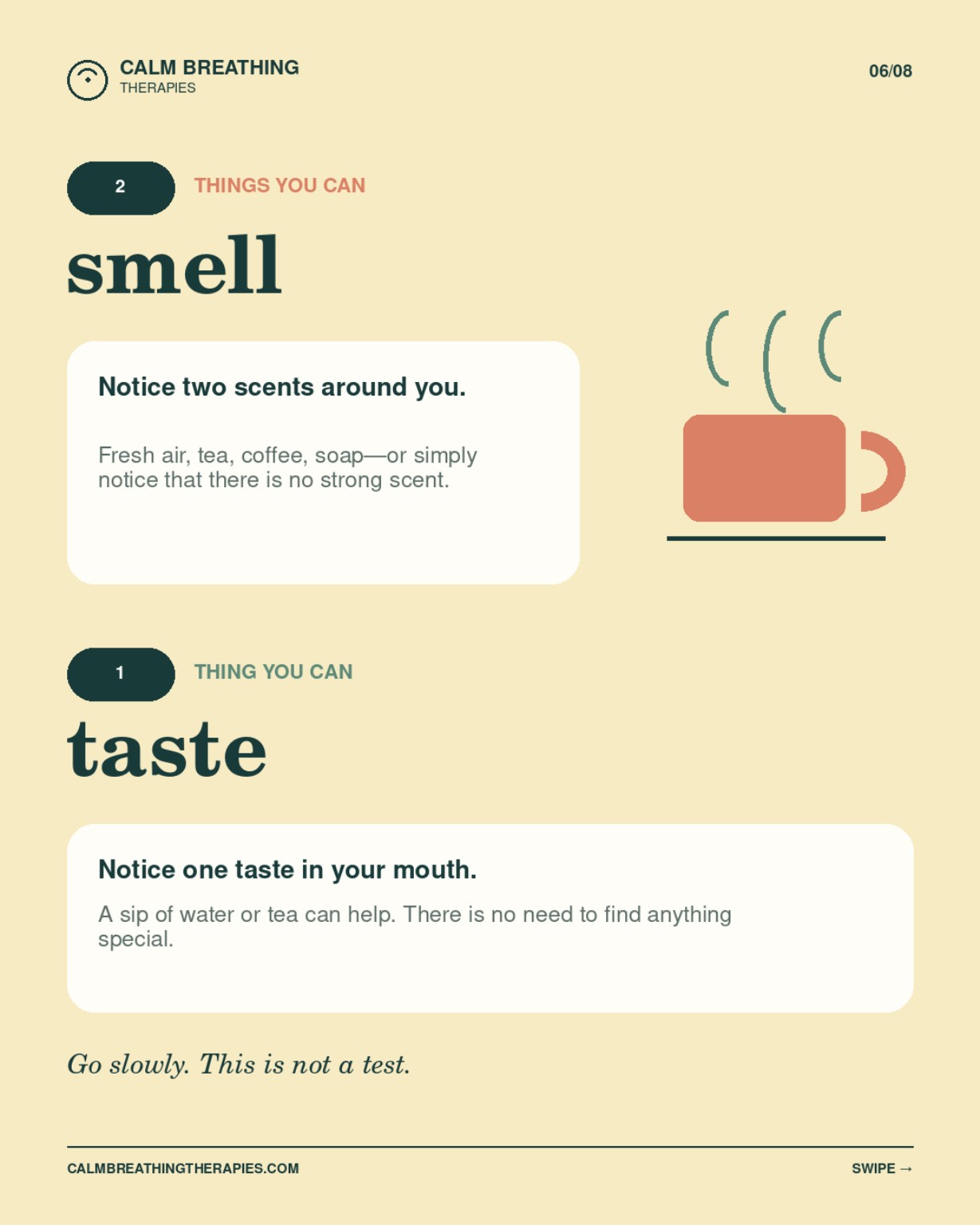
- 2 things you can smell. If nothing is noticeable, think of two familiar scents you like.
- 1 thing you can taste. Notice a current taste, take a sip of water, or imagine a familiar flavour.
You can say each item quietly, write it down or simply notice it. There is no need to find the “right” answers. The task is to spend a little time with what your senses are telling you now.
If one sense is difficult to use, substitute something else: name two colours, feel the support of the chair, or describe one object in detail. Grounding is meant to be flexible, not another test to pass.
What grounding can—and cannot—do
Grounding may help create a pause when you feel overwhelmed. It does not remove the situation you are facing, guarantee calm or replace treatment. Sometimes the most useful outcome is simply having enough space to choose your next action.
Practising when you are reasonably settled can make the steps easier to remember during a difficult moment. You might save a short version on your phone or choose one object that reliably helps you orient to the room.
If it does not feel helpful
Stop if the exercise increases distress or makes you feel more disconnected. You could try a simpler external anchor instead, such as naming the date and where you are, feeling both feet on the floor, or speaking to someone you trust. If anxiety, intrusive memories or feeling detached are affecting daily life, a GP or qualified therapist can help you consider suitable support.
Grounding is not an emergency response. If you cannot keep yourself or someone else safe, use the urgent support information.