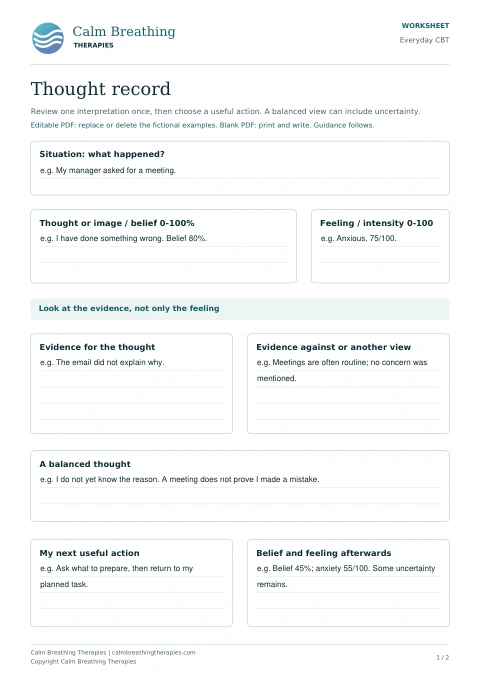
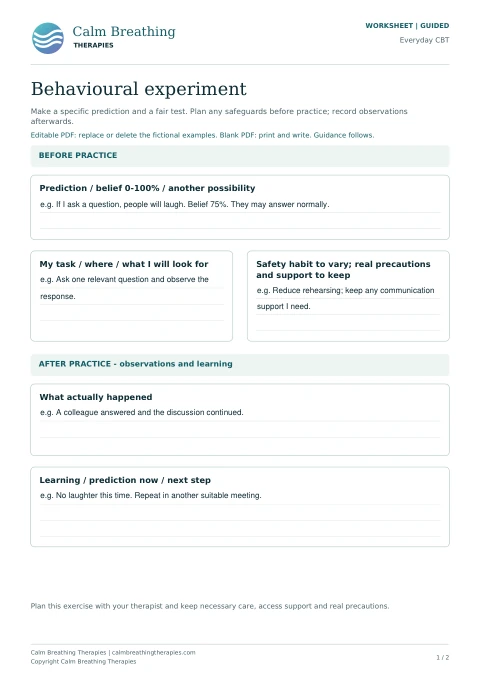
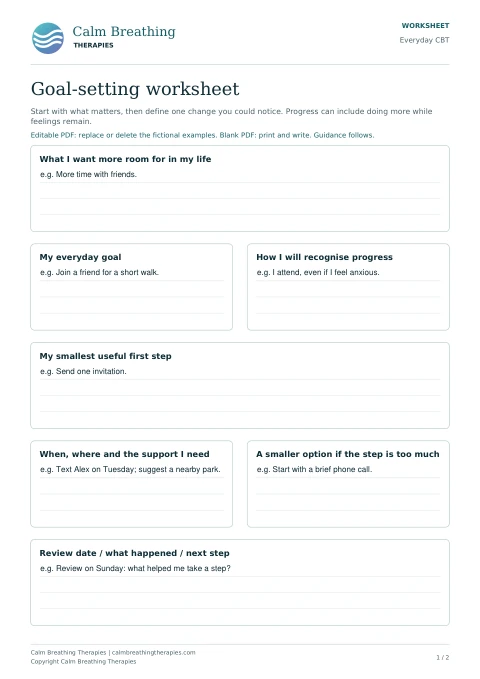
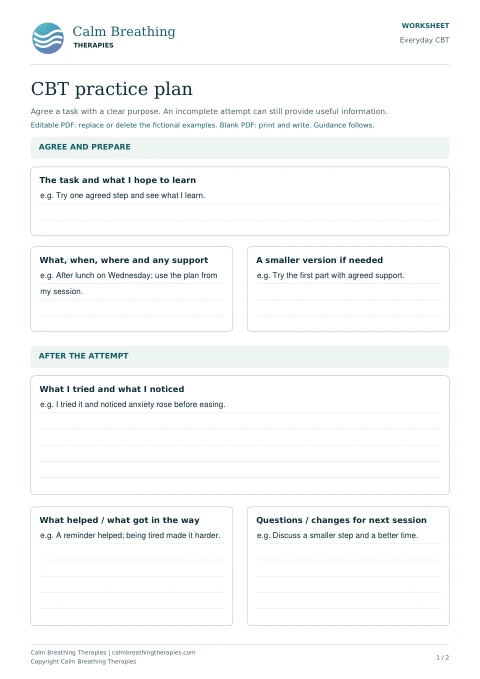
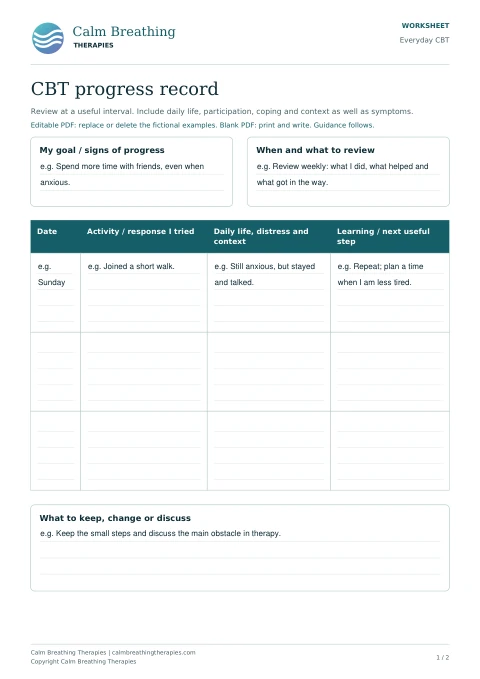
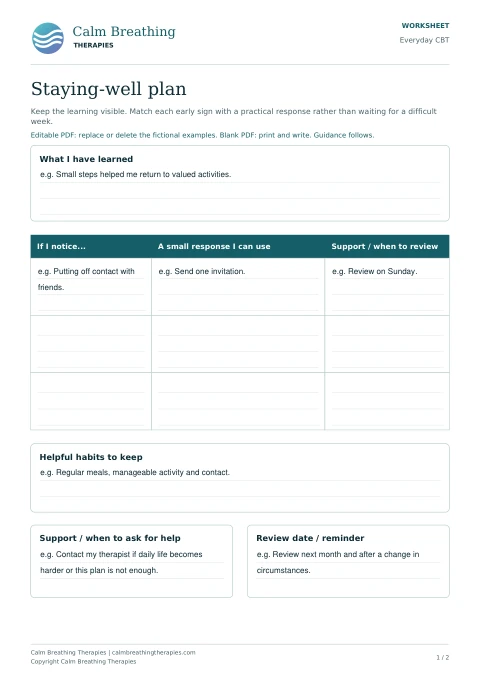
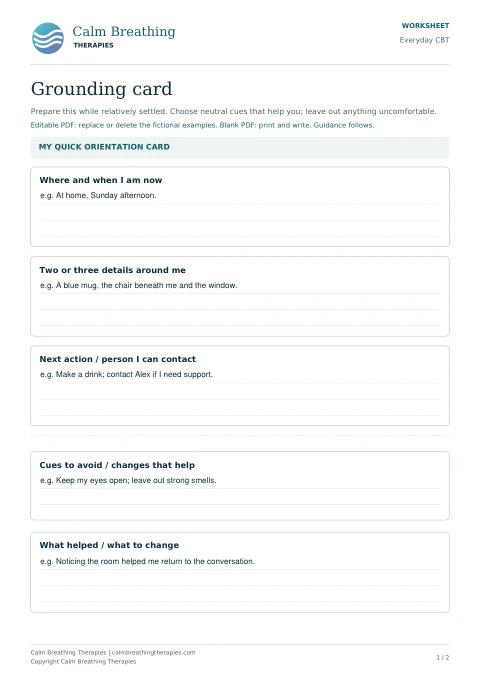
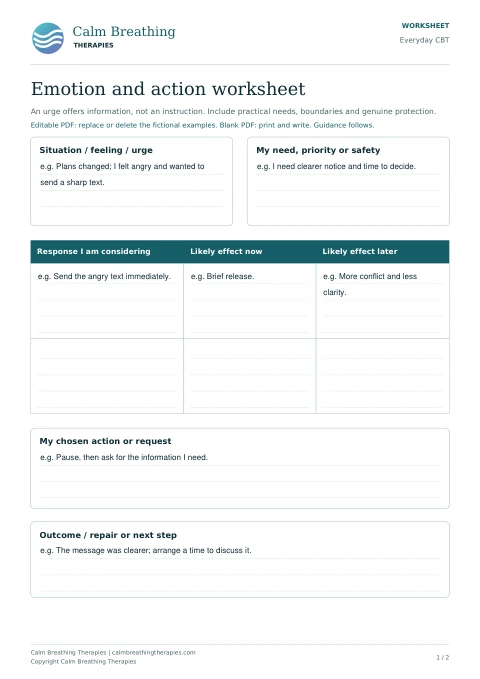
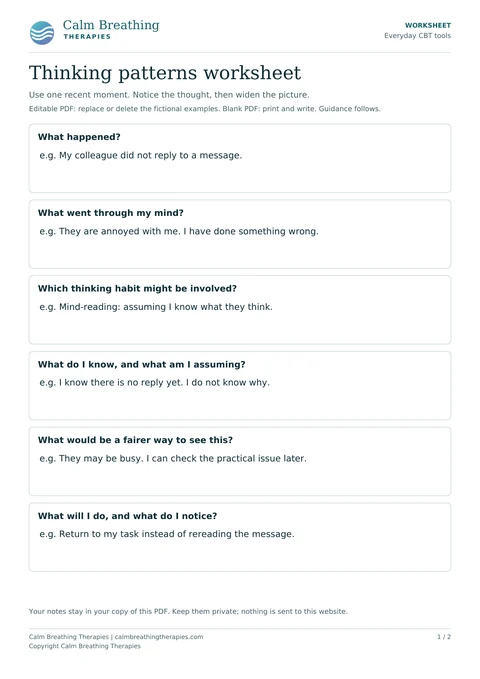
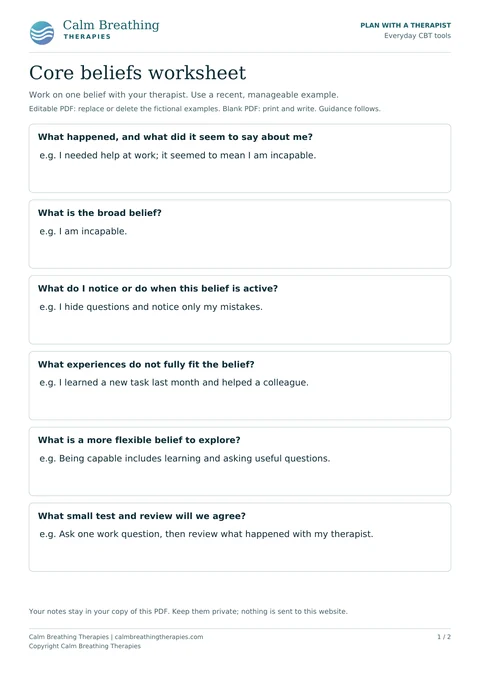
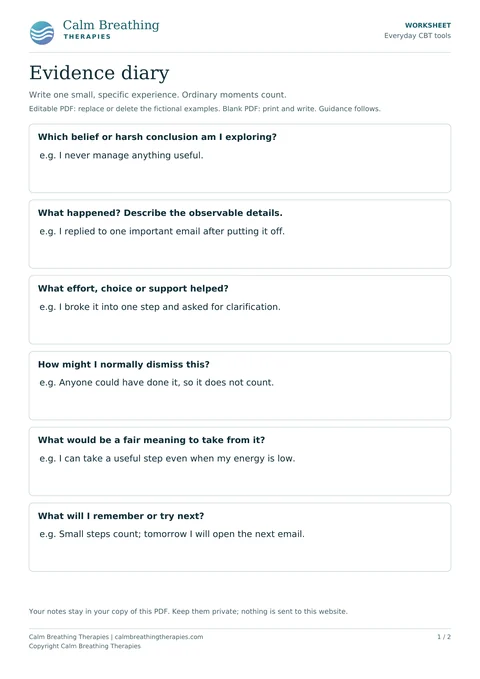
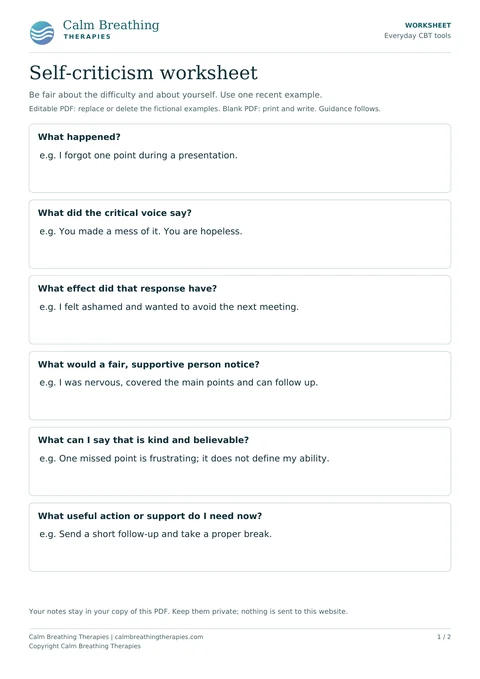
Print or type. The assessment form has blank fields for your own notes. Other resources offer fictional examples as described below. The worksheet comes first in every individual PDF, with guidance afterwards. Choose “Editable PDF · examples” for a short fictional example in each box or first diary entry. Select the text to replace or delete it in a PDF reader, then save a private copy. Later diary entries and table rows are blank. Choose “Blank PDF · print” for writing by hand. Browser PDF viewers vary. The complete toolkits contain blank printable sheets.
Read online. Read step-by-step guidance, a fictional example and the worksheet prompts as HTML under “Read the guidance and example”. You can use those prompts in your own notes. Completed answers are not collected by this site.
How to use these CBT worksheets
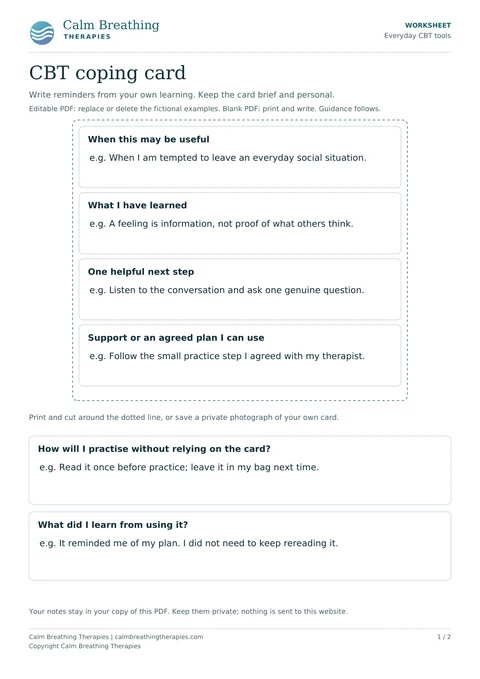
Thinking patterns, core beliefs, an evidence diary and a self-criticism worksheet offer different ways to explore difficult conclusions about yourself or a situation. Choose one that fits the problem. The coping card is a brief reminder of learning you have already tested.
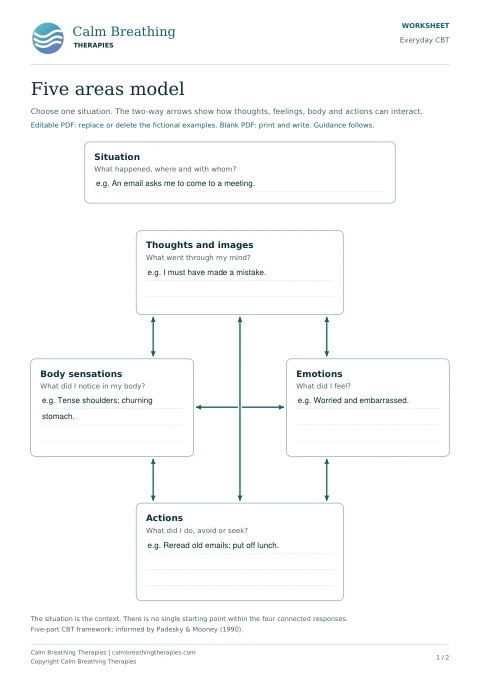
A worksheet can help you put a difficult moment into words, notice a pattern and choose something useful to try. These shared CBT tools support that process. Start with the question you want help with, rather than trying to complete every sheet. The Five Areas map helps you understand an experience; a thought record examines an interpretation; a behavioural experiment tests a prediction through an agreed action. Goals, practice reviews and a staying-well plan help connect the work to everyday life. The examples are fictional and are there to explain the task, not to tell you what your own answers should be.
Choose a recent, manageable example. A few clear words usually tell you more than a long account of everything that has happened. You can leave a box blank, draw instead of writing, or bring the unfinished sheet to a session. A formulation is a working explanation to explore together, not proof that your difficulties are your fault.
Match the tool to the problem. A balanced thought record may help with a harsh prediction, but repeated attempts to prove an intrusive thought safe can become an OCD ritual. If a concern involves actual danger, discrimination, abuse or an unmet practical need, responding to that situation matters. A worksheet should never talk you out of protecting yourself.
Look for useful learning rather than perfect performance. Notice what changed in your actions, attention or freedom to take part, even if feelings changed little. For people aged 16-17, ask a suitably trained therapist to adapt the task, language and support to your circumstances. These materials support understanding and between-session practice; they do not replace assessment or individual treatment.

 View worksheet